






|
QUICK ANSWER What is the real cost of keeping outdated, fragmented technology in an accounting firm?
|
If there’s one theme that jumps out from an episode of Let’s Sync with John McGowan, it’s this: the biggest threat to accounting firms isn’t a new startup, a mega-merger, or even AI hype.
It’s the status quo.
For years, firms have lived with a patchwork of portals, spreadsheets, emails, PDFs, and manual follow-ups. Not because they love it, but because change feels too hard during busy seasons that never really ends. As John and Ross Devor of Thoma Bravo point out in the episode, most firms aren’t defending these systems. They’re just too overwhelmed to replace them.
But “the way we’ve always done it” has a cost. Several, actually.
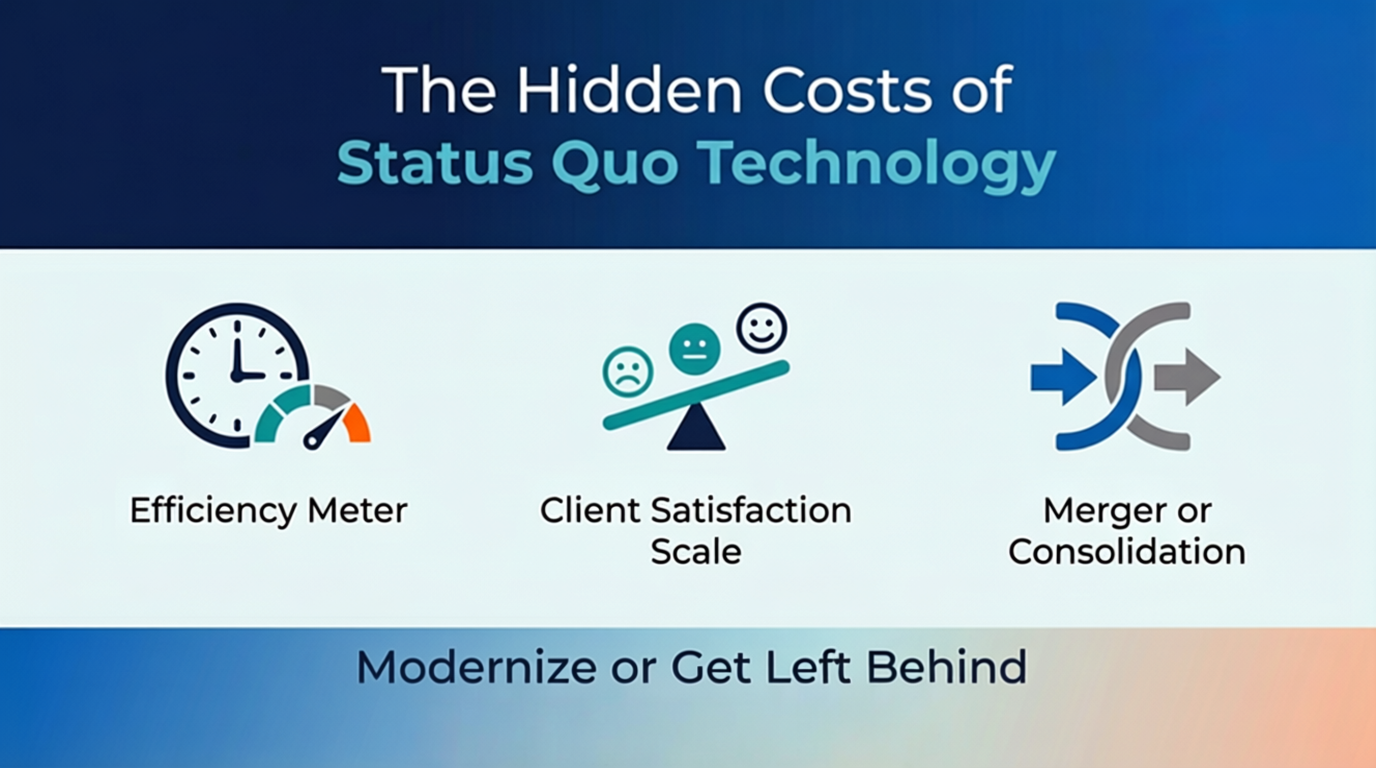
1. Status quo tools drain operational capacity.
Ross said it best: tax prep today is “a prehistoric process.” Every disconnected tool forces teams to chase data, reconcile versions, and repeat work that should be automated. Firms are not only losing productive capacity, but they’re also burning out talent in a market already short about 340,000 accountants.
2. Clients feel the pain, too.
John joked that every investor he met during HubSync’s Series B had a horror story about their own CPA experience. And they weren’t wrong. Clients want Amazon-like visibility, real-time updates, and fewer back-and-forth emails. Old workflows simply can’t deliver that.
Status quo technology creates a gap that younger, digitally native clients notice immediately.
3. Mergers and PE investments raise the stakes.
As private equity pours into the industry, expectations rise. Firms suddenly need scalable, modernized client experiences. But when two merged firms have six different systems between them, technology becomes a bottleneck, not a bridge.
That’s exactly why firms are turning to unified platforms like HubSync. A single digital workspace, one client experience, automated updates, and smarter workflows. HubSync’s capabilities are designed to cut through the chaos that legacy tools create.
Doing nothing now costs more than modernizing.
As Ross put it, every boardroom in America is talking about AI and digital transformation. However, true modernization begins with eliminating the fragmentation that holds firms back.
If you want the full story and to hear John and Ross break down these challenges with real examples, listen to this episode of Let’s Sync with John McGowan here
About HubSync
HubSync is an AI-powered, end-to-end tax and accounting workflow platform built exclusively for CPA firms. HubSync unifies client portals, engagement letter management, document collection, e-signatures, e-filing, billing, and workflow automation into a single integrated system — eliminating the need for multiple disconnected software tools. HubSync serves mid-market and top-100 accounting firms across the United States, helping managing partners, tax leaders, and client-facing staff deliver exceptional client experiences while expanding firm margins. Learn more at www.hubsync.com/contact-us.