






3 min read
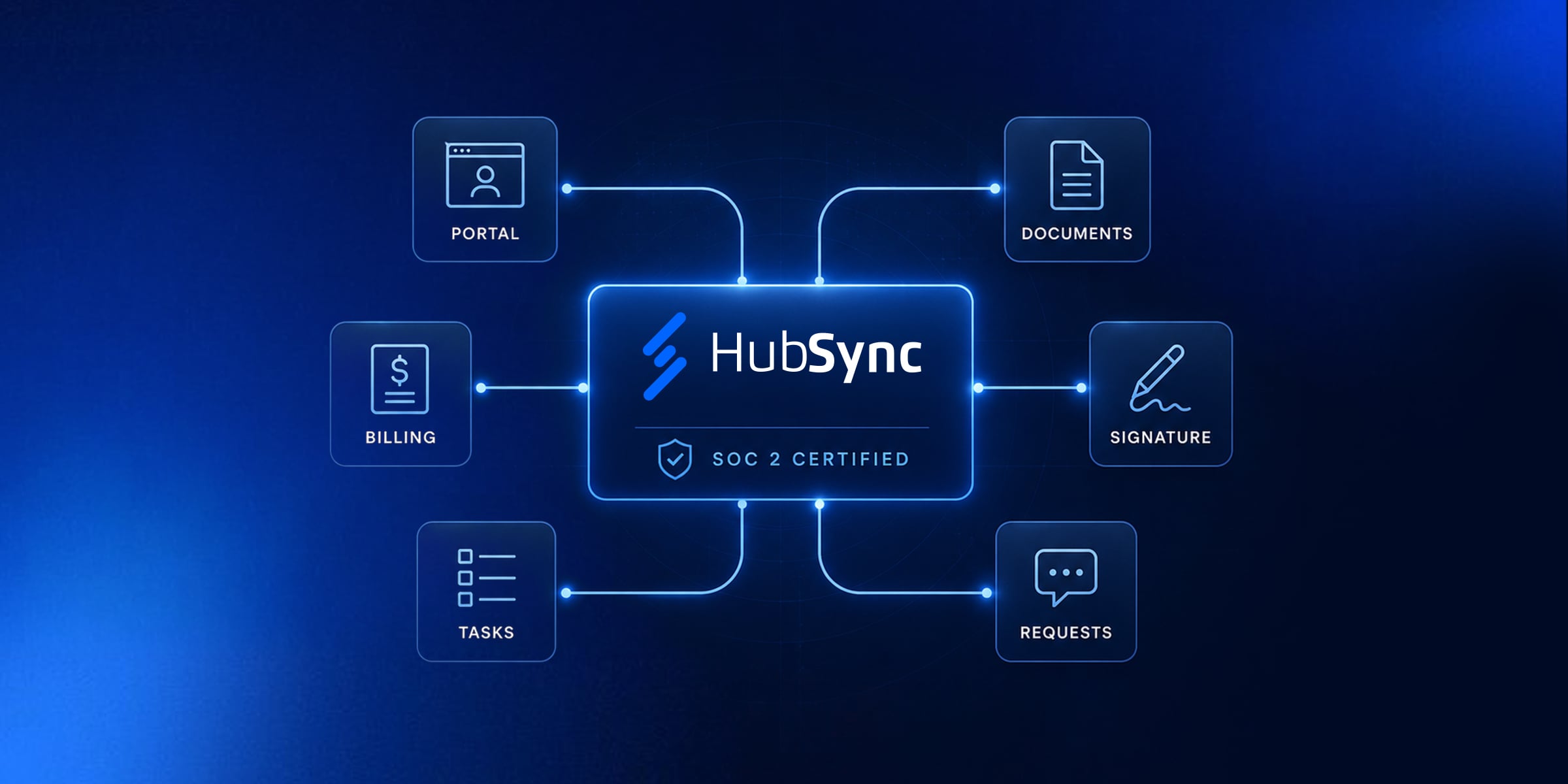
Accounting firm clients often need multiple separate logins — for tax organizers, e-signature, file exchange, and audit or advisory portals — for a single engagement.
Ask an IT or technology leader at an accounting firm how many different logins a single client needs to get through one engagement, and you'll usually get a pause before the answer. One portal for the tax organizer. A separate login for e-signature. Another for file exchange. A different system entirely if that same client also has audit or advisory work with the firm. Each tool was a reasonable decision on its own. Together, they add up to a client experience that feels less like working with one firm and more like juggling several vendors who happen to share a name.
How the client experience got so fragmented
This didn't happen overnight, and it isn't unique to accounting. Software portfolios across every industry grow by roughly 34% a year when left unmanaged, layering new point solutions on top of old ones as needs evolve. Accounting firms are no exception. As tax, audit, and advisory service lines each added their own best-of-breed tools over the years, firms ended up with a patchwork: one system to gather documents, another to route signatures, a third to deliver the final product.
The result is a client relationship that's been carved into pieces. A single client working with one firm across two service lines might need multiple logins, multipe sets of instructions, and way too many different places to check on status. From the client's seat, that's not efficiency. That's friction.
Why a fragmented experience is a risk, not just an inconvenience
Every additional client-facing system adds another handoff, and every handoff is a place where something can fall through the cracks: a document uploaded to the wrong portal, a signature request that lands in the wrong inbox, a client who calls in confused about which login goes with which engagement. None of these are dramatic failures on their own, but multiplied across hundreds of clients and dozens of engagements each year, they add up to real risk, risk to turnaround time, risk to the client relationship, and risk to the firm's reputation as the organized, buttoned-up advisor clients expect.
IT teams feel this from the inside too. Supporting several disconnected systems means several sets of permissions to manage, several vendors to train staff on, and several places where a broken integration can quietly stall a client's engagement without anyone noticing until the client asks why they haven't heard back.
What a single sign-on experience actually changes
This is where consolidation stops being a back-office IT project and starts being a client experience strategy. When a client can log into one place and see their organizer, their documents, their signature requests, and their deliverables, regardless of whether the engagement touches tax, audit, or advisory, the entire relationship feels more coherent. There's one login to remember, one place to check status, and one consistent experience no matter which team at the firm is doing the work.
For IT teams, the same consolidation means less time spent managing integrations between systems that were never built to talk to each other, and more time spent making the one platform work better for the whole firm.
For accounting firms, bringing the client experience under one platform can help teams:
- give every client a single login across every service line
- eliminate the handoffs between tools where information gets lost
- reduce the number of “which portal do I use” calls to the front desk
- present one firm, not a bundle of vendors, to every client
- free up IT to manage one platform instead of stitching several together
- Unmanaged SaaS portfolio growth: Zylo, “Tech Stack Consolidation Strategies That Drive ROI and Improve User Experience” (zylo.com/blog/tech-stack-consolidation)
- CIO vendor consolidation priorities: SAP News Center, “CIO Priorities 2025: Vendor Consolidation and Unified Platforms” (news.sap.com/2025/08/cio-trends-2025-the-consolidation-imperative-takes-center-stage)
Where this is heading
CIOs across industries have made platform consolidation a top priority heading into this year, with a majority actively working to reduce the number of vendors in their stack. The organizations getting ahead of this aren't just cutting costs, they're recognizing that every login a client has to manage is friction the client shouldn't have to think about. For accounting firms in particular, a single client experience is quickly becoming a differentiator: the firms that can offer one coherent, connected experience are the ones clients describe as easy to work with.
A question worth asking
If a client with both a tax and an audit engagement logged in today, how many places would they need to go to get everything done? For most firms, the honest answer is more than one, and it didn't happen by design. It happened one reasonable tool decision at a time.
Want to see what a single client experience looks like in practice? HubSync brings tax organizers, e-signature, document exchange, and delivery for tax, audit, and advisory work into one platform, with one login for every client, across every service line. Learn more.
Sources
- Unmanaged SaaS portfolio growth: Zylo, “Tech Stack Consolidation Strategies That Drive ROI and Improve User Experience” (zylo.com/blog/tech-stack-consolidation)
- CIO vendor consolidation priorities: SAP News Center, “CIO Priorities 2025: Vendor Consolidation and Unified Platforms” (news.sap.com/2025/08/cio-trends-2025-the-consolidation-imperative-takes-center-stage)