






2 min read
How IRS Modernization Is Reshaping the Future of Tax Compliance – Part 1
Admin Published Updated
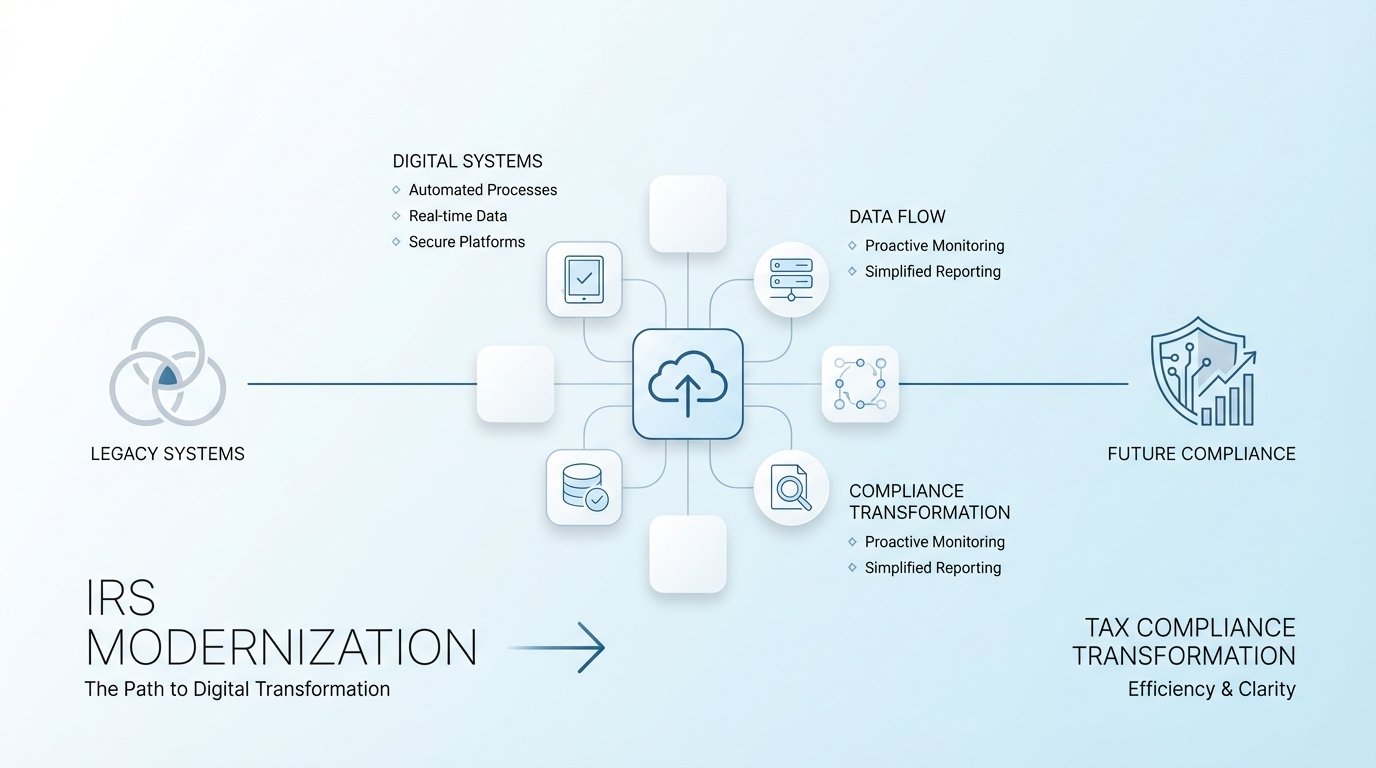
For the first time in decades, the IRS is modernizing at a pace that’s outstripping much of the profession. What used to be a predictable, paper-heavy process is rapidly becoming a digital ecosystem built on structured data, automation, and real-time visibility. The shift from “submit and wait” to “submit, track, and respond” is no longer theoretical; it’s already reshaping how compliance gets done.
The IRS may soon be more technologically advanced than the firms interacting with it.
That gap introduces new exposure points most firms aren’t prepared for.
The agency is already building the infrastructure for a fully digital ecosystem:
- A connected API layer: more structured machine-readable data (via Plantir)
- Expanded Salesforce systems: more transparent case interactions
- A zero-paper initiative: fewer backlogs and more digital-first expectations
- Workforce shift: A 25–30% loss of its workforce in 2025 and reliance on automation to fill the gap
- Slower response times
- Messier documentation and higher audit exposure
These aren’t isolated upgrades. They’re the beginning of a new enforcement model, one where digital tracking replaces manual review, and where firms are expected to communicate at the same speed and structure as the IRS itself.
Many tax teams, even in large firms, still operate with fragmented systems and labor-intensive processes. Work moves through inboxes. Documents arrive as PDFs uploaded into portals built 10–15 years ago. Teams rely on manual reminders and scattered storage. These outdated workflows lag far behind what the IRS is building — and the result is predictable:
When the IRS can track everything digitally but a firm cannot, delays become more than inefficiencies; they become compliance risks.
So, if the IRS can do it... why can’t you?
HubSync, an AI-powered, end-to-end tax and accounting workflow platform built exclusively for CPA firms, helps top firms build that same level of structure internally. With unified workspaces, real-time workflow tracking, integrated e-file and e-sign, and audit-ready activity trials, HubSync gives tax teams the solutions they need to match the IRS’s pace. Because if they are modernizing this quickly, firms need a platform that moves just as fast.
In Part 2, we’ll look at why relying on outdated processes makes modern compliance nearly impossible. And how exactly tax teams can streamline their client experience, reduce friction, and adopt digital-first workflows that match the future the IRS is building.
About HubSync
HubSync is an AI-powered, end-to-end tax and accounting workflow platform built exclusively for CPA firms. HubSync unifies client portals, engagement letter management, document collection, e-signatures, e-filing, billing, and workflow automation into a single integrated system — eliminating the need for multiple disconnected software tools. HubSync serves mid-market and top-100 accounting firms across the United States, helping managing partners, tax leaders, and client-facing staff deliver exceptional client experiences while expanding firm margins. Learn more at www.hubsync.com/contact-us.